Research projects using ManuScrape
This research project aims to understand youth crime from an offender perspective, a dimension that has so far been neglected. While many studies have been conducted on victims' experiences and exposure to various forms of crime, relatively few studies seek to understand the factors that drive perpetrators to offend. Gaining this understanding is crucial to developing effective prevention measures that can address the underlying causes of criminal behaviour. One of the challenges of studying offenders is that traditional survey methods have limited access to uncovering behaviour and motives.
This study will therefore utilise an original, but already proven, digital ethnographic method in combination with 'Ungeprofilundersøgelsen' in a mixed-method design. HUK creates a solid basis for analyses that can contribute to strengthening both national research and the development of prevention efforts in the area.
The project is financed by Crime Prevention Council and Ulla V. Bondensens Foundation.
PI: Kristoffer Aagesen
A digital study of how extreme textual and visual online content is used and shared (ExOC)
The ExOC study is a DFF founded study that aims to explore the creation and sharing of hateful memes online. This will involve a netnographic approach consisting of scraping, data collection, and interviews with youths that spread different forms of hate on a wide range of social media platforms through memes, potentially based on their belonging to multiple and sometimes overlapping deviant subcultures.
The project is financed by Independent Research Fund Denmark.
PI: Jakob DemantPh.d:: Jonatan Mizrahi-Werner
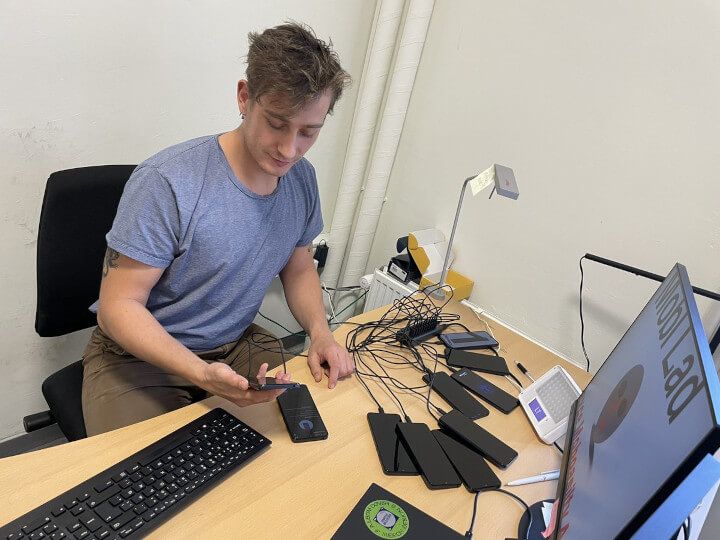
This study examines how Snapchat’s recommendation algorithms facilitate digital drift from legal to illegal activities. Using microsociological observations, we conducted a quasi-experiment with 40 profiles that engaged with gray markets for nicotine vapes and sex work.
Within four days, 65% of these profiles were directed to illicit drug sellers, despite no prior engagement with illegal content. Our audit of Snapchat’s affordances highlights their criminogenic potential, showing how platform algorithms can actively steer users toward illicit networks. These findings underscore how social media platforms function not only as offender convergence spaces but also as facilitators of illegal activity.
PI: Jakob DemantPh.d:: Kristoffer AagesenOther research papers
Demant, J., & Moretti, A. (2024). Intrusiveness and the Public-private Divide in Netnography: A Situated, Structured Approach for Ethical Research in the Context of Closed, Group-based, or Hidden Social Media Behaviour. International Journal of Qualitative Methods, 23, 16094069241257937.
Moretti, A., & Demant, J. (2026). Neutralization without Drift: The Aesthetics of Cruelty in Hateful Meme Sharing. International Journal of Qualitative Methods, 23, 16094069241257937.
Waldner, O., Moeller, K., Balija, A., Nguen, V., & Stockfors, J. (2026). The grey market for alcohol on social media in Sweden. Nordic Studies on Alcohol and Drugs, 14550725261420678.
Aagesen, K., & Demant, J. (2025). From Gray to Black Markets – A Quasi-Experimental Study on Algorithmically Driven Digital Drift Opportunities on Social Media. Deviant Behavior, 1-14.
If you are aware of other publications using ManuScrape, please email Jakob Demant